
Suggested Talk Hashtags
As part of the new Planet Hunters classification interface, the Summary page (see below) suggests some hashtags you could use to label the light curves you’re seeing in Talk and in the Talk comment area on the Summary page. A few people on Talk have asked for a full list, so here’s a handy list of the first set of hashtags suggested by the science team at launch of the new Planet Hunters.
Summary Page
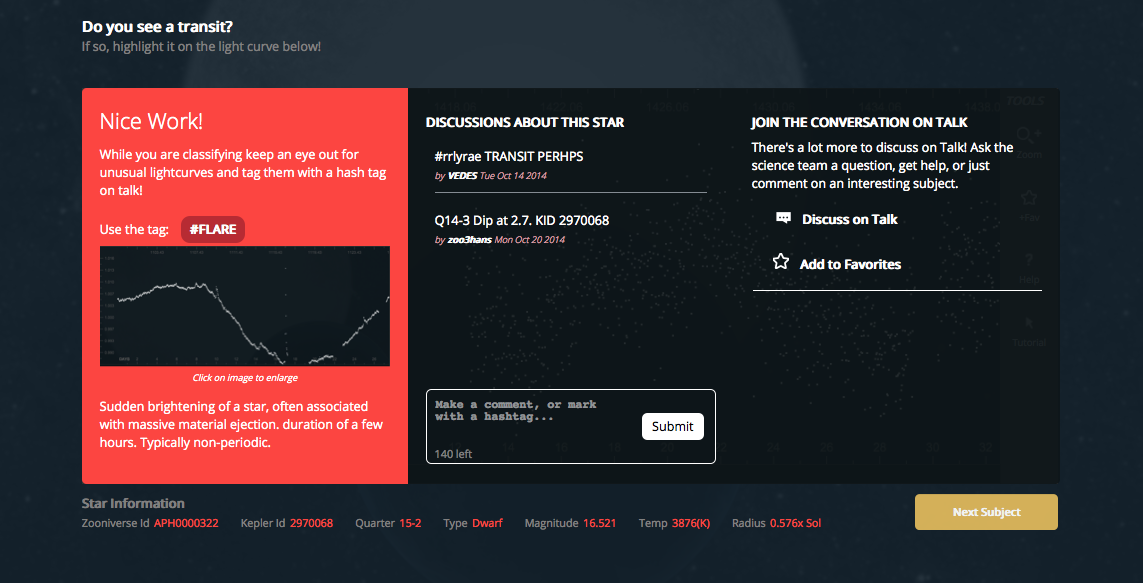
Classification summary page. A suggested hashtag to be on the eye out for is suggested in the left in the red box.
#rrlyrae
RR Lyrae Star – Pulsating star with periods ~1/2 day

#cepheid
Pulsating star with periods >1 day.
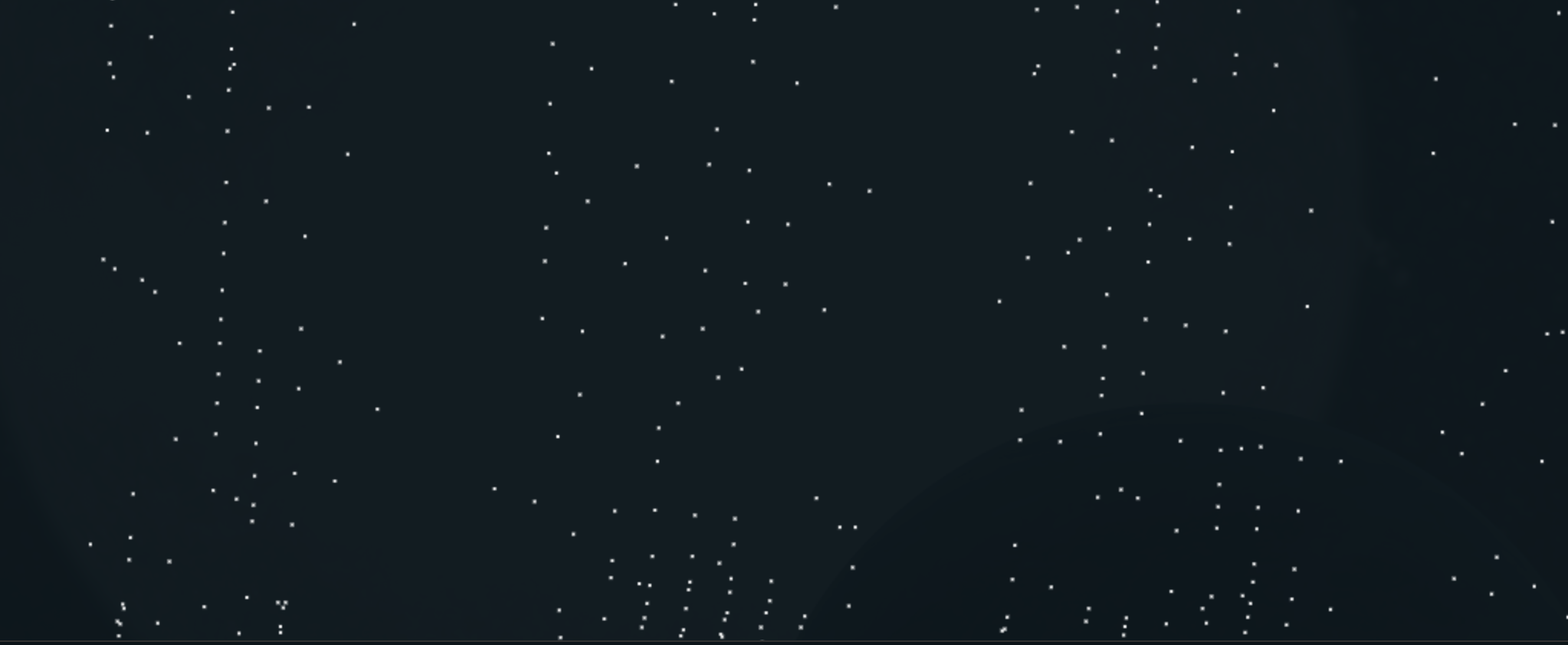
#pulsating
Pulsators – Rapid up and down changes in brightness on the order of a few hours
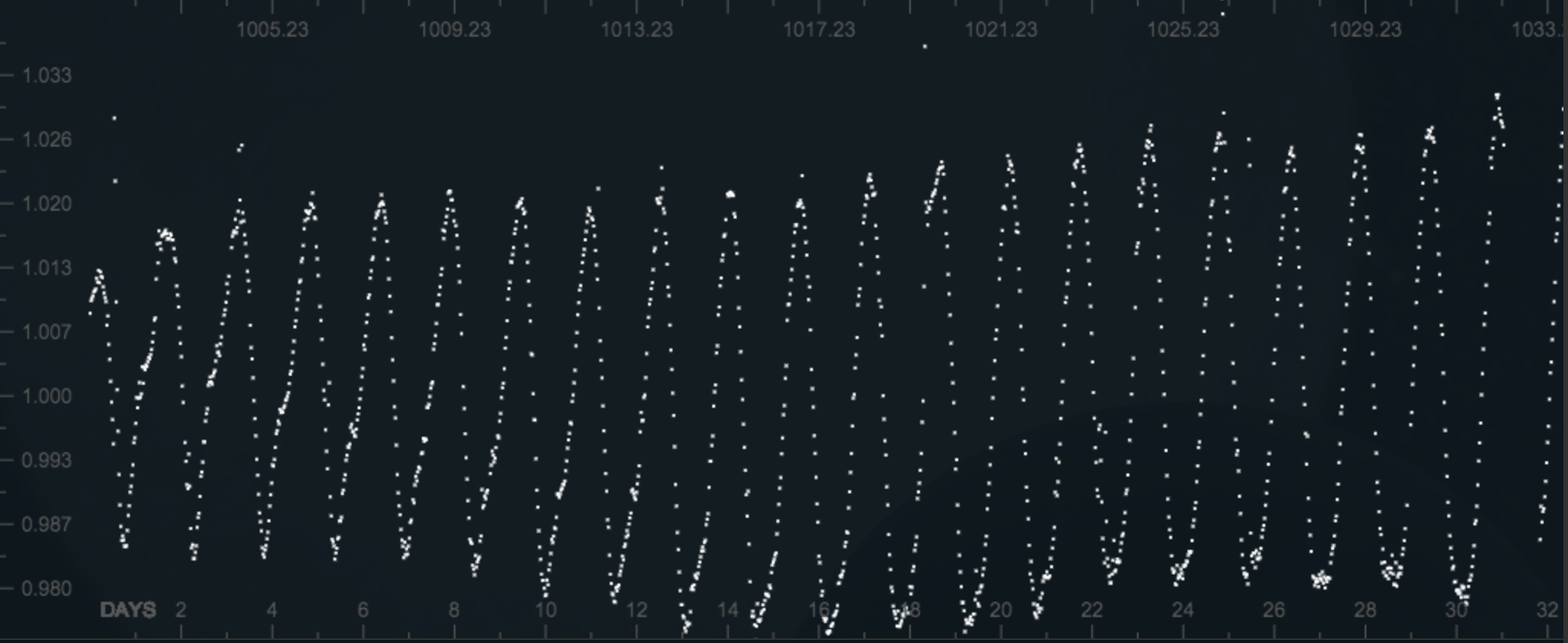
#eclipsingbinary
Eclipsing binary – A star transits another star, often exhibiting V-shape and uneven transit depth
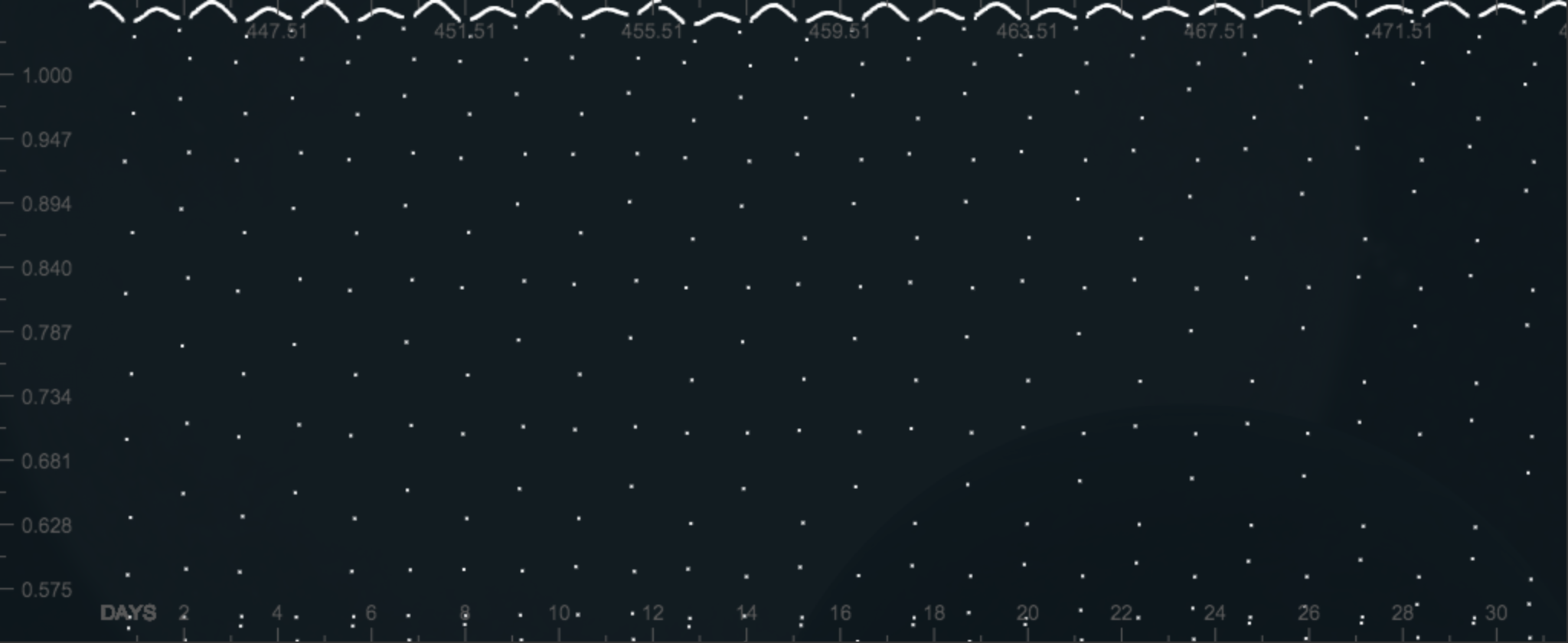
#cv
Cataclysmic variable – Cataclysmic variables (cv’s) are a class of stars where the sudden ignition of material on the surface of a white dwarf results in gigantic increase in brightness for several days before returning to natural quiescent state.
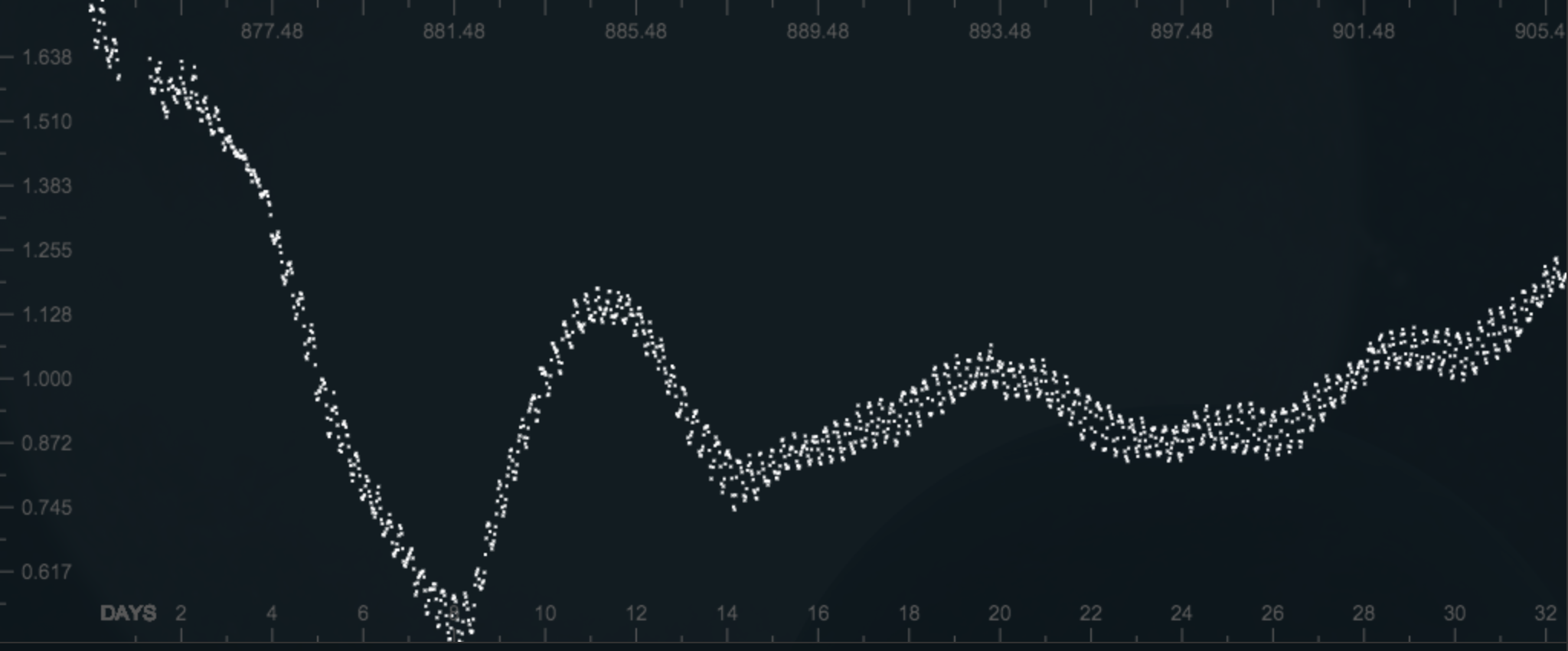
#variable
Variable star – Change in brightness on timescales greater than 1 day. May be periodic or non-periodic.

#heartbeatstar
Heartbeat star – Two stars get very close together but avoid collision. Their structure changes, and the light curve exhibits a shape like a cadiogram.
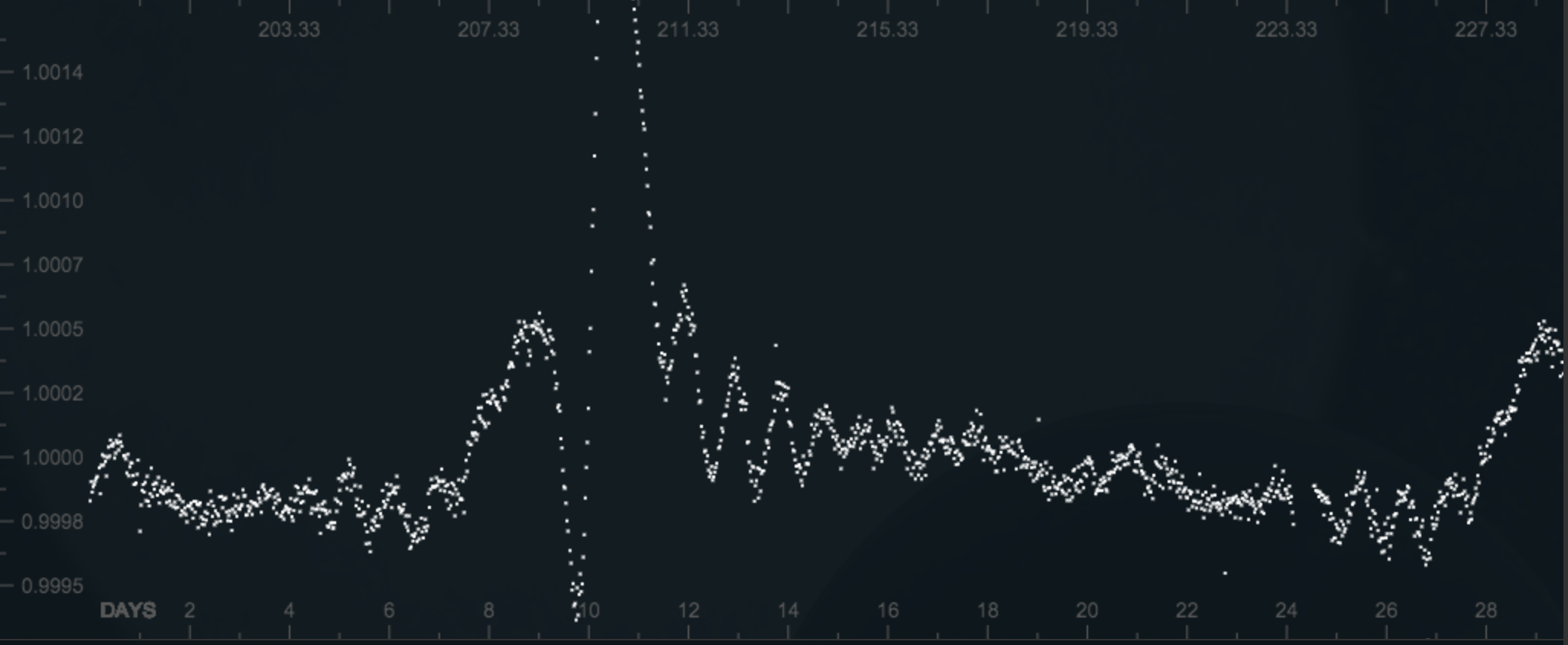
#glitch
glitch – Occasional malfunction of data reduction pipeline.
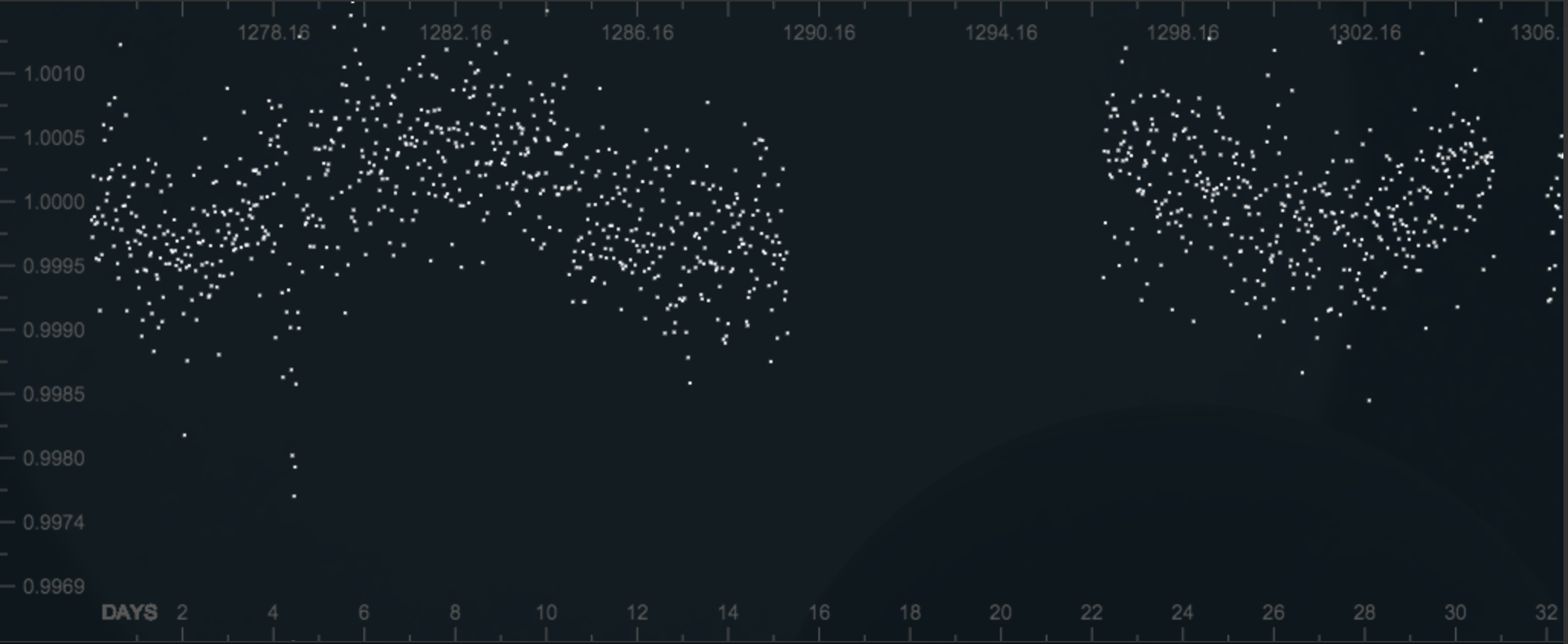
#transitingplanet
Planet transit – A planet goes in front of a star and blocks a portion of the star light
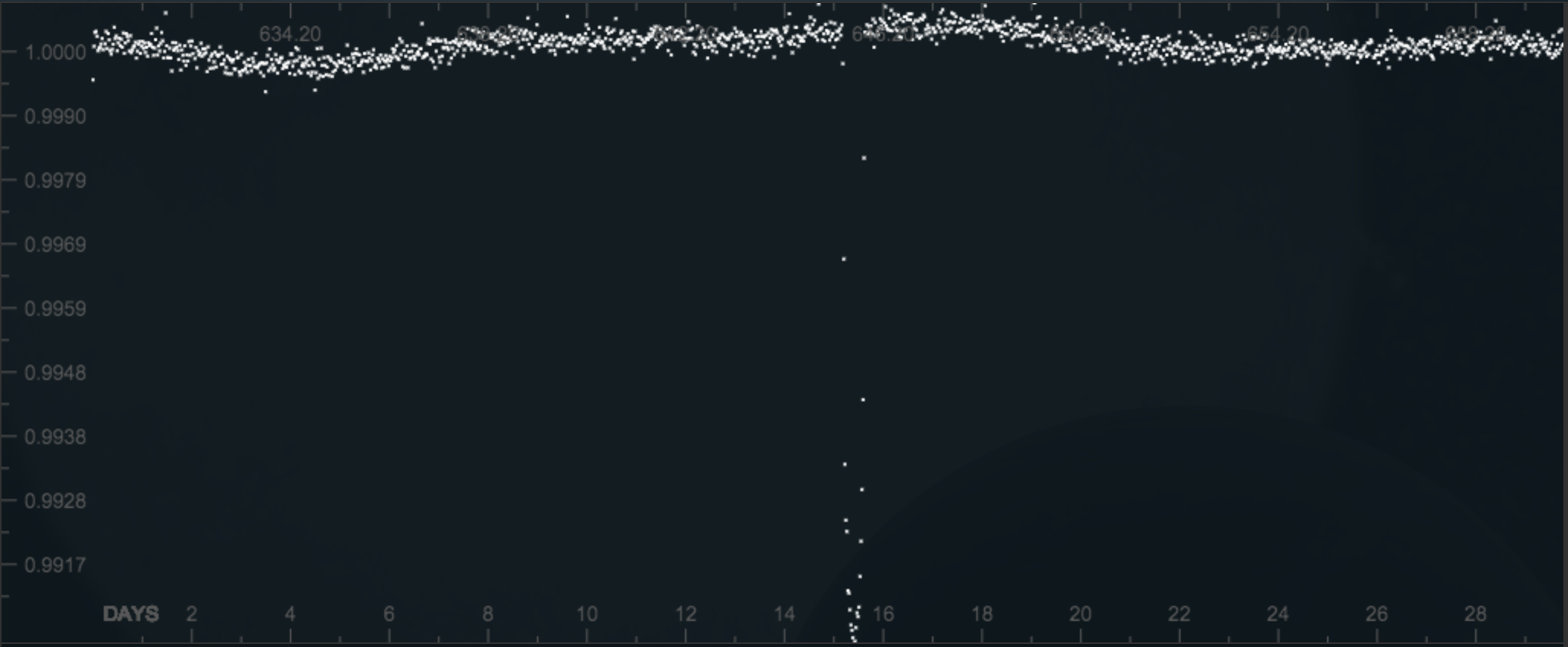
#flare
Stellar flare – Sudden brightening of a star, often associated with massive material ejection. duration of a few hours. Typically non-periodic.
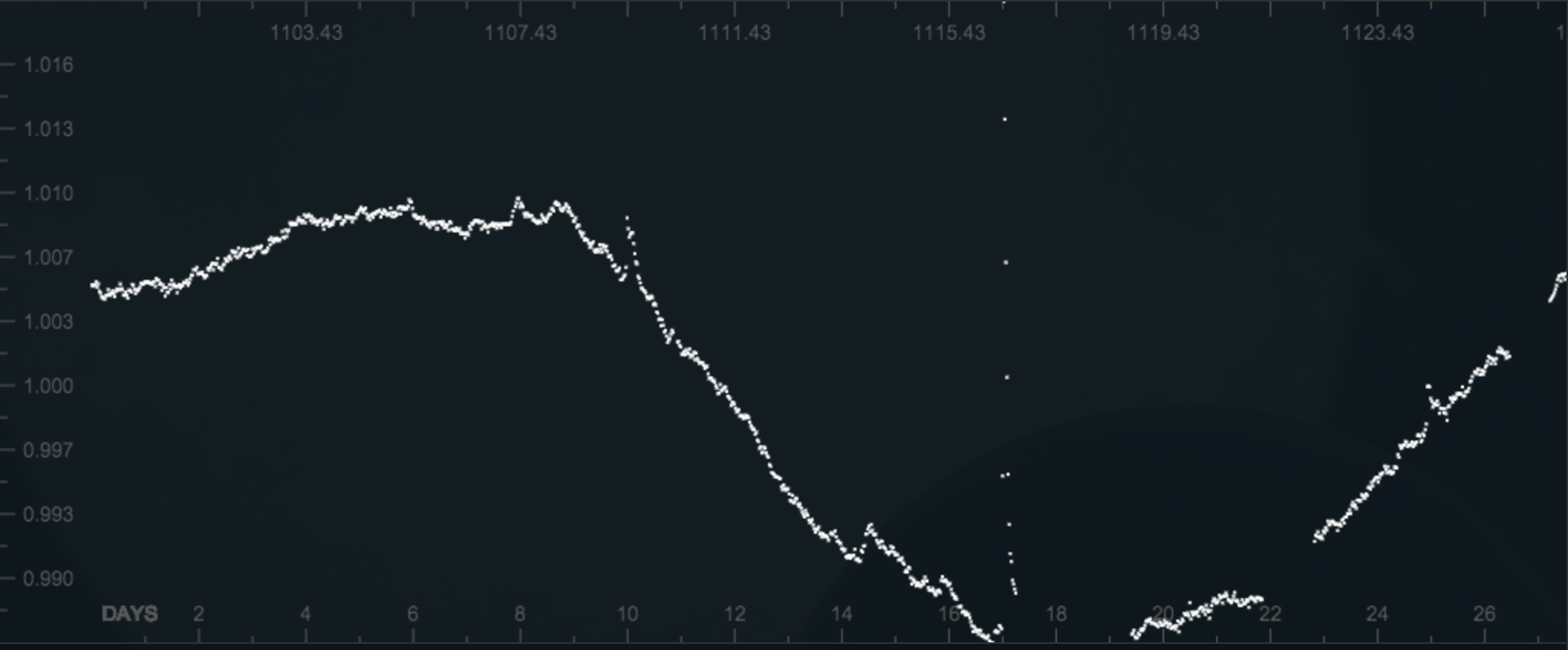
These listed above are suggested hashtags the science team has come up with. A light curve can definitely be described by more than one hashtag. Also do feel free to use your own hashtags too. There are many more ways to describe and sort the light curves and stars. You can see the most frequent hashtags being used by the Planet Hunters community on the left side of Talk under ‘popular hashtags’
An Introduction to the New Planet Hunters Talk
There were some big changes to the Planet Hunters website and our Talk discussion tool yesterday. Along with the main Planet Hunters website and classification interface being completely rebuilt, we are now pairing the main Planet Hunters website with the latest version of the Zooniverse’s Talk discussion tool. Now when you go to http://talk.planethunters.org it will take you to Planet Hunters Talk 2.0. In this blog, I’ll give you a brief overview and introduction to the new features added into Planet Hunters Talk.
What happened to the original Planet Hunters Talk?
Before I introduce the new features of Planet Hunters Talk 2.0, I wanted to give an update of what happened to the original Planet Hunters Talk. The original Planet Hunters talk is still online at http://oldtalk.planethunters.org, and you’ll find a link to it on the navigation bar of the New Talk. The original Talk is a repository of discussions and discoveries, and we’re not taking it offline or shutting it down. You can still log in and post there. The differences in how stars are treated between the two versions and the sheer volume of interconnected discussions and comments makes it very difficult and time consuming to attempt to migrate that content to Talk 2.0. There’s a very real chance we could do this incorrectly, so we thought the safest option was to leave the original Planet Hunters Talk online as resource and with all light curves shown from Planet Hunters 2.0 going to the new Talk.
Starcentric versus light curve chunk-centric
There are a few key differences between new Planet Hunters Talk and the original version. Firstly how we treat the stars is different. On the original Planet Hunters Talk, we treated each 30-day light curve section shown in the classification interface as a different entry in Talk with its own page, where people could leave 140 character comments and start side conversations. So a single star would have many discussions spread across different light curve Talk pages with no easy way to tell that someone had posted a comment about a different quarter. In the new version of Talk, we give each star a Talk page (with the APH ID representing the Planet Hunters ID for the star) so comments and conversations are grouped together from people who see the different light curves chunks from the star.
Overview of Planet Hunters Talk 2.0
Talk Subject Page
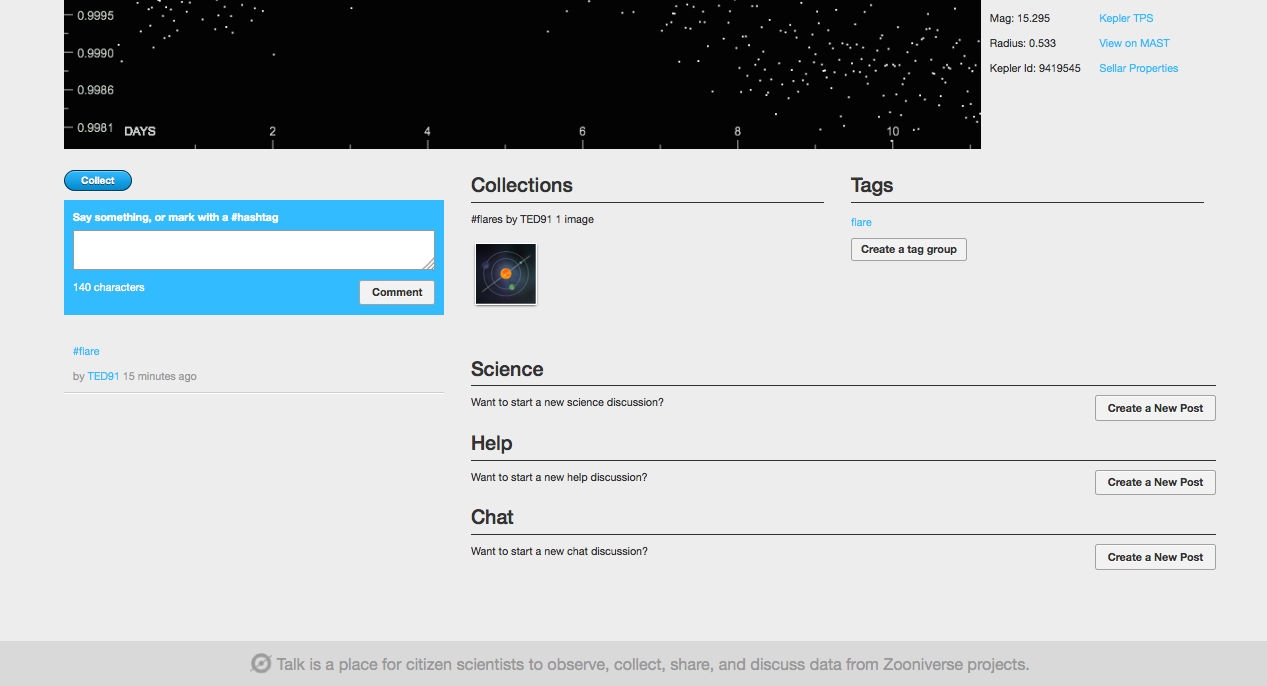
Below is an example of a Talk page for star APH0000622 (http://talk.planethunters.org/#/subjects/APH0000622). Here you’ll be presented with a light curve viewer for the star with all available quarters of Kepler data for this star to peruse through (if you enter this page from the main classification interface the light curve chunk you reviewed in the classification interface will be automatically loaded in the light curve window). Later in the future, we plan to add scrolling and zooming capability to the light curve viewer. In addition we list the Kepler id for the star, and any other information we have for the star (like radius and temperature) and some useful links which we’ll describe in more detail in another blog post.Like original Talk, you can make collections, write 140 character comments, add hashtags, and have longer side discussions about the star and the light curve you reviewed.

Side Discussions:
Just like old Talk, if you have more to say than 140 characters there’s the ability in New Talk to start and have longer side discussions about the star. The difference is that now you have to select which topic, Help, Science or Chat your discussion will be about it and then click on the Post button to start the discussion. this is because the discussion is also linked and archived for easy access on the Discussion Boards (more about this in the next section).
Discussion Boards
New Talk has discussion boards (which you can navigate to with the top bar by clicking on Discussion Boards) like original Talk in three categories: Help, Science, and Chat. The main difference is there are now subboards under each of these three headings where you can post and start discussion threads.
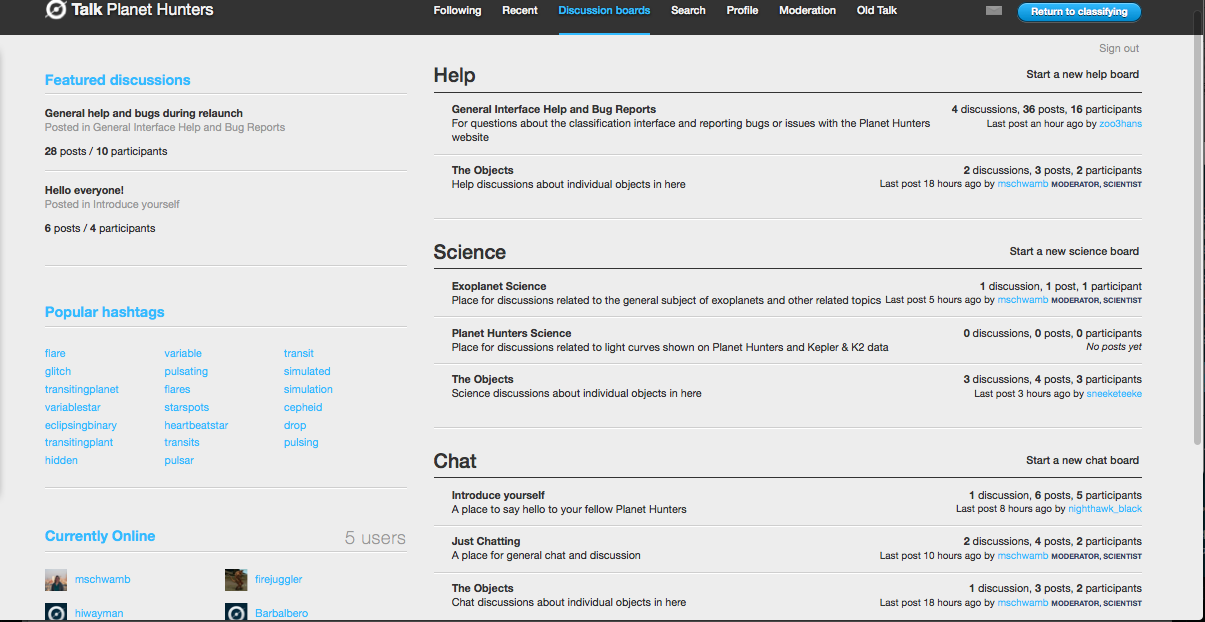
You’ll notice that each of the three board categories has an ‘The Objects’ subboard. This is where you can also access the side discussions you make on the star Talk pages. They get linked and archived here for so they’re easy to find by the Planet Hunters community and the science team. In the old version of Talk a side discussions were often buried and hard to get to. Now you can quickly check out each ‘The Objects” board and see what longer discussions people were having about a given star.
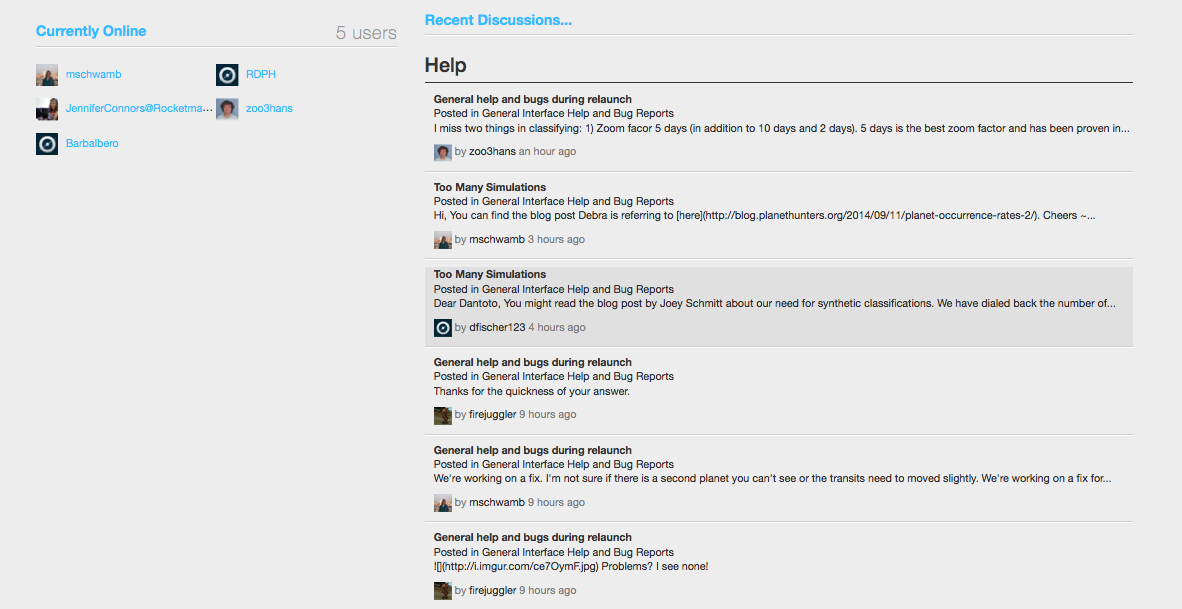
Front Page/Recent Page
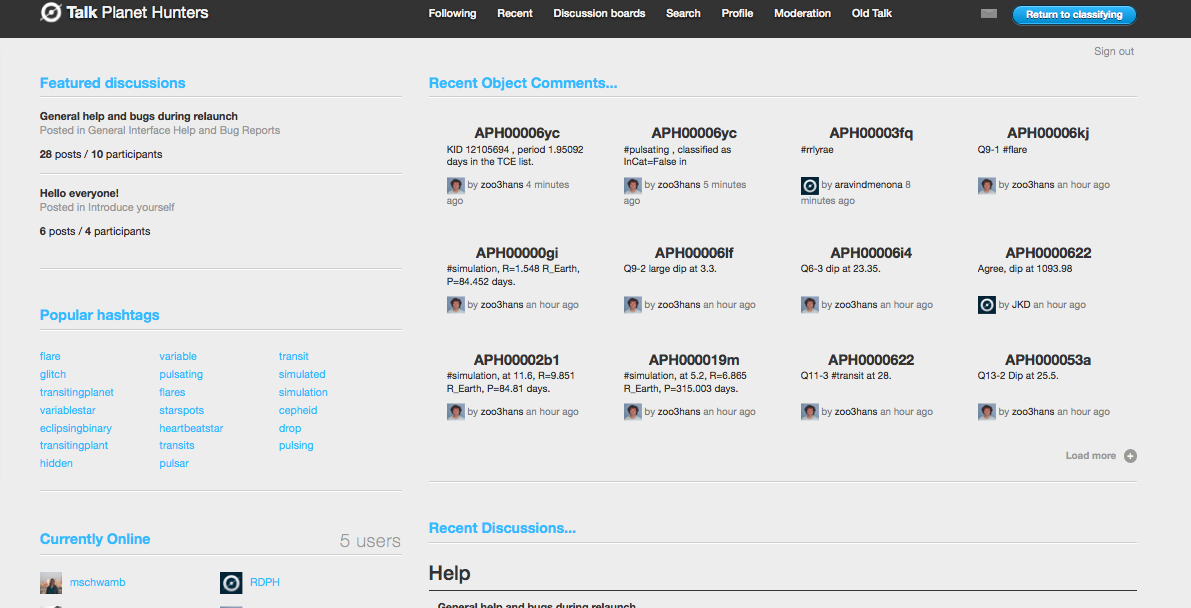
The font page of Talk accessible when you go directly to http://talk.planethunters.org ( or by clicking on the Recent tab in Talk) lists the most recent 140 character comments made on Talk as well as displays the latest comments in the discussion board threads for easy access. By clicking on the comment, you’ll get taken to the Talk page for the given star. By clicking on the discussion board post, will take you to directly to that thread.
Entering Talk:
You can either go directly to the Talk website by url – http://talk.planethunters.org or you can access Talk through the main Planet Hunters classification interface. Once your classification for a light curve is submitted in the main interface, a summary page appears (see below). Here you can directly write a 140 character comment about the light curve you saw (that will appear on the star’s Talk page) without leaving the classification interface. If you click ‘Discuss on Talk’ you’ll be brought to the Talk page for the star with the light curve chunk you reviewed queued up in the light curve viewer.
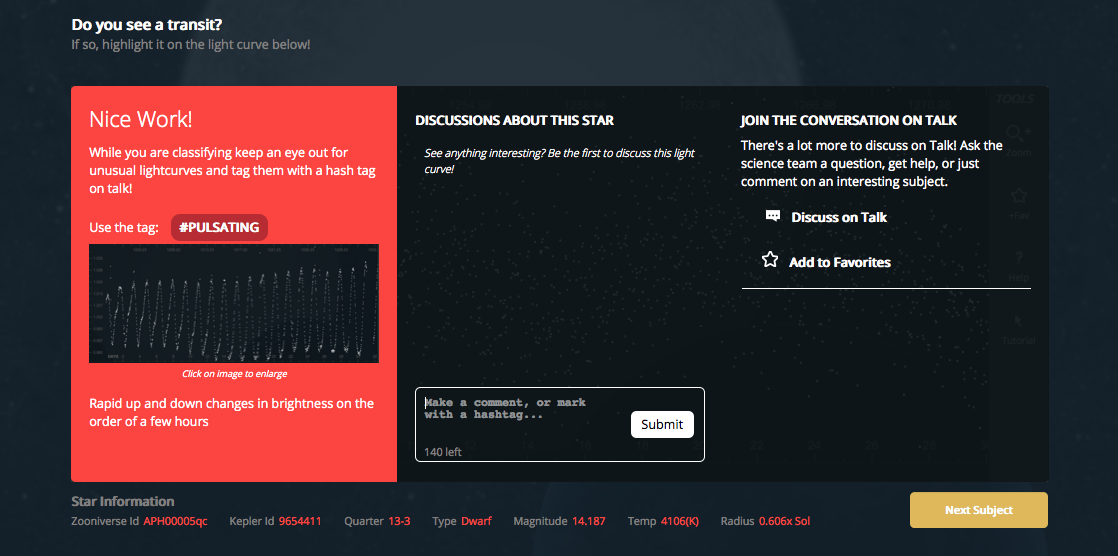
Summary page in the main Planet Hunters classification interface
Messaging:
Direct/private messages on New Talk are a little different that has been done in the past for Planet Hunters. You won’t get an email when someone sends you a private message, instead the envelope icon on the top right of the navigation bar (by the return to classifying button) will tell if you have any unread messages. If you have an new unread message, the envelope will brighten and the number of unread messages will be listed. Clicking on the envelope or the Profile tab will take you to your list of messages.

More Features and Upgrades to Come
We wanted to get to the new interface out to you as fast as we could so that we’ll be ready for the K2 data which we’re currently processing and placing in a format the new interface can read in. There are some small finishing touches the Zooniverse developers will be adding in the coming days to new Planet Hunters Talk. Thanks for your patience as we go through these small growing pains with the project. If you have suggestions of features you would like to see in Talk, please post your ideas in this thread, and we’ll try our best to accommodate those requests.
Need Help? Ask the Planet Hunters Talk Moderators
The Planet Hunters Talk moderators (TonyJHoffman, constovich, and echo-lily-mai) are standing by ready and willing to help. So if you’ve got a question about the new Planet Hunters or Talk don’t hesitate to ask them.
A Brand New Planet Hunters
On December 16, 2010, the Zooniverse launched Planet Hunters to enlist the public’s help to search for extrasolar planets (exoplanets) in the data from NASA’s Kepler spacecraft. Back then we didn’t know what we would find. It may have been the case that no new planets were discovered and that computers had the job down to a fine art. The project was a gamble on the ability of human pattern recognition to beat machines just occasionally and spot the telltale dip in a star’s brightness due to a transiting planet that was missed by automated routines looking for repeating patterns.
Nearly four years later, Planet Hunters has become a success beyond anyone’s expectation. To date 8 published scientific papers have resulted from the efforts of nearly 300,000 volunteers worldwide. Planet Hunters has discovered 9 planet candidate co-discoveries with the Kepler effort, over 30 unknown planet candidates not previously identified by the Kepler team, a confirmed transiting circumbinary planet in a quadruple star system (PH1b), a confirmed Jupiter-sized planet in the habitable zone of a Sun-like star (PH2b), and identified the 7th planet candidate of a 7 planet star system.
Today in collaboration with JPL’s PlanetQuest, the Planet Hunters science team and the Zooniverse are proud to announce the launch of Planet Hunters version 2.0. We’ve taken your feedback and the lessons learned over the past 3.5 years to build a fast new interface that we think will take the project to the next stage. Using the Zooniverse’s latest technology, Planet Hunters 2.0 is built specifically with the next generation of transiting exoplanet surveys in mind, including the new K2 mission, which repurposes the Kepler spacecraft.
Kepler had been monitoring ~170,000 stars for the signatures of transiting exoplanets over the past 4 years in the Kepler field located in the constellations of Cygnus and Lyra. The new-two wheel Kepler mission dubbed ‘K2‘ will have Kepler observing brand new sets of 10,000-20,000 stars every 75 days. These stars are different from the sources that Kepler had been monitoring in the past. Your eyes will be one of the first to gaze upon these observations. Most of the K2 target stars will have never before been searched for planets, providing a new opportunity to find distant worlds. K2 observations will be made available by NASA and the Kepler team to the entire astronomical community and the public shortly after being transmitted to Earth and processed. We aim to get them on Planet Hunters 2.0 as fast as we can.
We think that Planet Hunters 2.0 will play a key role for finding extrasolar planets in the age of K2, and we have built a site we think can deliver the best science and find interesting planets with your help. We aim for rapid identification and dissemination of planet candidates discovered by Planet Hunters in the K2 era. You’ll hear more about additional new features and tools built into Planet Hunters 2.0 for analyzing K2 light curves closer to the release of the first K2 engineering observations sometime this month.
We also know there is much interesting and valuable science left to do with the Kepler field data. Much of the four years of Kepler field data has not been searched by the original Planet Hunters, and there may very likely be planets lurking in the light curves missed by the computers waiting for you discover. The new Planet Hunters will start by focusing all 17 quarters of observations on a subset of the Kepler field stars starting with cool M dwarf stars, the most common star in the Galaxy. We’ll use the classifications from these select set of stars from the original Kepler mission as well the new K2 observations to study the variety of planetary systems and their frequencies.
You’ll hear more about the science goals of Planet Hunters 2.0 and new functionality, tools, and guides built into the website in the coming days and weeks. We’re excited about this new phase of the project, and we hope you are as well. We don’t know what we’ll find, but with your help, we can’t wait to find out! Whether you’re new to the project or a seasoned veteran, with the new and improved Planet Hunters you can search for planets around other stars like never before.
It’s just possible that you might be the first to know that a star somewhere out there in the Milky Way has a companion, just as our Sun does.
Fancy giving it’s a try?
Planet Occurrence Rates
By Joey Schmitt (Planet Hunter team)
Planet Hunters will soon start work on a new, important question in the field of exoplanets: how common are planets around other stars? This question has become a hot topic in exoplanets, but Planet Hunters has one major, unique advantage. Planet Hunters are sensitive to planets with just one or two transits. The automated computer algorithms require three or more transits; otherwise, they would be overloaded with spurious signals. This allows Planet Hunters to explore much longer periods than the rest of the field.
Until now, Planet Hunters have been looking for planets one quarter at a time. This has been successful in discovering more than 60 new planet candidates and two new confirmed planets (and counting). However, this one-quarter-at-a-time method doesn’t let us figure out how common planets truly are.
Planet Hunters will be moving from this quarter-focused method to a star-focused method with Planet Hunters 2.0. Instead of showing a few quarters of data for all Kepler stars, we will be showing all quarters of data for some stars. This will allow us to determine how common planets really are around these stars. (But don’t worry. Whenever we get a download of fresh data from the new K2 mission, these new light curves will take priority.)
The Planet Hunters team has decided to first show all the light curves for all the red dwarf stars. These stars are much smaller than the Sun, live for tens of billions of years or more, and have habitable zones very close to the star. They’re the best chance to find habitable, Earth-like worlds. Red dwarfs are also the most common type of star in the universe, making up about 70% of all stars. Kepler has only observed about 4,000 red dwarfs consistently, so we hope to finish this project over the course of just a few months (but keep in mind that the peer-review process can take longer). If we’re successful, we will do the same thing for the tens of thousands of Sun-like stars.
The biggest challenge in exoplanet statistics is to know how many planets we’re missing. However, we can actually figure this out by creating “synthetic data”. To non-scientists, this might sound like nonsense, but this is an extremely important tool that scientists use all the time. We must “inject” synthetic transits of planets of various sizes and periods into real light curves and let the Planet Hunters users classify them. This allows us to know how effective we are at finding these planets and correct for how many we’re missing.
For example, if Planet Hunter volunteers detect 50 of 100 synthetic Earth-size planets at a period of 300 days, then we know that if we detect 5 true Earth-like, 300-day planets, there are actually about 10 of them. Unfortunately, in order to correct (with any sort of scientific certainty) for the number of planets that we all may miss, we must inject a large number of synthetic planets into the real data.
This project will roll out with the release of our new site. The Planet Hunters team is excited about this new project and wants you to know that you will be helping answer one of the most important questions in astronomy: how common are planets in the Milky Way?
Coming soon…..
Yesterday marks the start of a new era for the Kepler spacecraft with the public release of the first observations from K2, the two-wheeled Kepler mission.
After four years of staring at the same field and the failure of 2 reaction wheels on the Kepler spacecraft, Kepler is now observing ever changing fields on the ecliptic, plane of the Solar System, for periods of ~75 days. From March to May of this year, Kepler stared at the same patch of sky monitoring stars nearly continuously for planet transits, supernovae, among other reasons. You can find more details about Campaign 0 here and the K2 mission here. Now there’s a new set of stars never before looked at, that may be harboring unknown and undiscovered planets. The Planet Hunters science team and Zooniverse team are working hard to getting the K2 data prepared and ready for showing on the Planet Hunters website.
There are some new challenges to overcome in order to get the K2 data ready, but we’re working on making it possible in the near future to view K2 data Thanks to funding from JPL PlanetQuest, we’ve been able to rebuild the Planet Hunters website to make Planet Hunters 2.0. These past many months the Zooniverse development team and the science team have been working to make Planet Hunters 2 easier to use as well as faster and more efficient for searching for exoplanet transits in Kepler field data and especially with the K2 mission in mind. We’ve incorporated much of the feedback we’ve gotten from you over the past 3 years into the rebuild. The site is not quite ready from prime time, but will be very soon. Stay tuned to this space for more updates on Planet Hunters 2 and the K2 data. In the meantime if you have questions about the rebuild we’ll try to answer them on Talk here.
A sneek peak of the new Planet Hunters front page
K2 keeps on rolling – the start of Campaign 1 observations
NASA has recently approved funding for the two-wheeled Kepler mission dubbed ‘K2.’ Field 0 was an engineering field that Kepler started monitoring before the senior review decision. The data will be science quality with Kepler monitoring about ~8000 sources, which includes open cluster M35. Observations started on March 8th and were recently completed on May 30th. You can see the proposals astronomers put in requesting targets for Kepler to monitor and the final selected target list here.
With the Senior Review decision and the funding, the K2 mission officially starts with observations of Campaign 1. On May 30th, Field 1 observations officially commenced and should last for roughly 75 days. You can find out which targets Kepler is observing in Field 1 here.
The engineering data of Field 0 should now have been downloaded to the ground and is likely undergoing processing at NASA. The preliminary data products should be ready hopefully sometime in August. With new stars there will be chances to find new undiscovered planets. The Planet Hunters team and Zooniverse team are working on ways to have the data ready and accessible on the website soon after it is released by NASA and the Kepler team to the astronomical community and the public. Stay tuned to the blog as we get closer to August.

Credit: ESO/S. Brunier/NASA Kepler Mission/Wendy Stenzel.
Welcome to the Era of K2
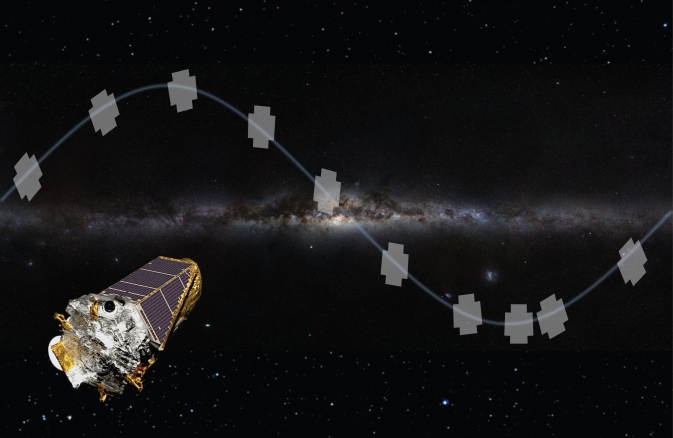
Image Credit: NASA Ames/ W Stenzel
Last August, I wrote about the end of Kepler’s original mission as it had been operating for the past 4 years. Kepler was launched in 2009 with a goal for providing a census for planets around Sun-like stars and helping us understand the frequencies of rocky planets. Kepler stared at the same field monitoring 160,000 stars nearly continuously for those 4 years. To achieve the precision pointing to obtain precise enough measurements to detect rocky terrestrial planets, Kepler had to point with extreme precision with the stars moving very little on the camera. To do this Kepler had three reaction wheels (and one spare) that would help nudge the spacecraft slightly one way or another. Last year, Kepler suffered a second reaction wheel failure that prevents it from continuing with its mission of monitoring the Kepler field. Pointing at the Kepler field, the spacecraft moves too much, and this effectively ended the Kepler mission as is. Kepler had taken its last observations of the Kepler field.
The Kepler team devised a new way of observing with Kepler using solar irradiation to help stabilize the spacecraft and act as the third reaction wheel. They set out to test it and prove this was a viable mission (which they dubbed ‘K2‘) that would return interesting science and discoveries worthy of NASA funding. Back in December, NASA gave the go ahead for K2 to compete with other viable missions in the Senior Review. Well, what is this Senior Review? Space missions cost money. You have to pay for the engineers that keep the spacecraft happy and running, pay the project managers and support staff and scientists, have funds if there are guest observer programs, as well as it costs money to use time on the Deep Space Network to send commands to and receive the data from your favorite telescope. The NASA Senior Review is NASA’s way of prioritizing and deciding which already existing missions will continue on and receive funding from the limited amount of funds available to spend while building and launching new spacecraft. Ben Montet from Astrobites has a nice summary description of the competing missions from this year’s Senior Review. Funding is tight and although these missions and spacecraft have all produced interesting science and capable of continuing to do that, not every mission that was on the chopping block is guaranteed to get money to pay for its operating costs. There simply isn’t enough to go around.
Officially today, NASA has announced the results from the Senior Review. You can read the full report from the panel here and the response from NASA. The verdict from the panel for Kepler/K2: “This is an outstanding mission and we look forward to the results from the program. K2 uniquely addresses a range of observational goals and is expected to engage a broad community of scientists.” K2 has been recommended by the review to continue with the extended K2 mission, and NASA has agreed to provide funding. The Kepler team didn’t get all the money they asked for, but 90% of the requested budget more than enough for the K2 mission to officially start science operations in June. K2 is a go! There will be new light curves from never before seen stars coming from Kepler over the next 2 years!
Congratulations to everyone involved in the Kepler project who made this happen. They put in lots of tireless effort to find a way to use Kepler in a novel observing scheme and prove that it could deliver interesting science worthy of continuing on. The Senior Review specifically about the science goals and case for K2: “K2 will allow exoplanet surveys of all stellar classes,O-M, giants-dwarfs, and white dwarfs as well as the asteroseismology of late stars, studies of nearby open clusters for the fundamental properties of pre-main sequence (PMS) and zero age main sequence (ZAMS) stars, and explore supernovae and accretion physics in AGNs. These are but a small sample of what can be achieved with the study of precise photometric long term continuous data“ .
This is exciting times for the study of extrasolar planets, as Kepler is now primed to deliver a whole new crop of planets and other astrophysical discoveries and results. The Planet Hunters science team and the Zooniverse are working on preparing the site to be able to ingest and serve the K2 data to you all in a fast and efficient way. Stay tuned to this space as we get closer to August when the first science grade K2 data is released.
You can learn more about the K2 mission at http://keplerscience.arc.nasa.gov/K2/
Meet Our Talk Moderators
As many of you probably know, we have three moderators who volunteer their time to help the Planet Hunters community on Planet Hunters Talk . If you have questions, issues, or the rare dispute on Planet Hunters Talk, Jo, Joe, and Tony are a great resource. You can contact them directly via private message or hit the report button to alert them to a thread or post that requires their attention.
Let’s learn more about them:
Jo Echo Syan (echo-lily-mai)
Hi Planet Hunters. My tag is echo-lily-mai, many people wonder what to call me? Well, Echo is fine and some call me Lily. I’m very honoured to be moderator on PH and to be part of such a ground-breaking project.
I remember being in a room in Oxford England with other zooites (zooite is a pet term for people working on a Zooniverse project ) when the Planet Hunters project was announced. I can remember being seriously enthusiastic about the idea.

Planet Hunters Talk Moderator Jo Echo Syan
Here are some photos of us ‘zooites’ at Astrofest this year.

Image credit: Jo Echo Syan

Image credit: Jo Echo Syan
Over the years, I have worked on a few other Zooniverse projects. Galaxy Zoo which I am very fond of, and as a moderator on the now sadly retired Merger Zoo project.
I am interested in Art and Science and try to explore the two subjects through my Enjoy Chaos pages.
There are some amazing projects PH folks are working on at the moment, and I feel very proud to be part of the team when Planet Hunter papers are published.
This has only been possible because each and every person took part and helped with the project, whether that culminated in finding a planet candidate or not!!
I hope that I can help along the way, even if it is directing someone new to a link where they can find out what an eclipsing binary is (yep they look amazing) Or, by passing information on to the science team that needs to be checked out.
If you are new to PH, do ask questions, feel free to explore, and behave!!!! You can always contact a moderator if you have any concerns. Most of all enjoy.
We are all very lucky to be part of this science community, which a few years ago never existed and wouldn’t have been possible.
Is our Earth special? Of course it is. Is it unique? I hope we find out one day…
Tony Hoffman (TonyJHoffman)
My name is Tony Hoffman, and I’ve been fascinated by the night sky since I was an adolescent. Over the years I’ve participated in a number of citizen science astronomy projects, including the SOHO comets program; the Spacewatch FMO Project (near-Earth asteroids); Ice Hunters (Kuiper-belt objects), Stardust@home (interstellar dust); GalaxyZoo; and SETI@home; and have even had some success in finding new astronomical objects in several of them.
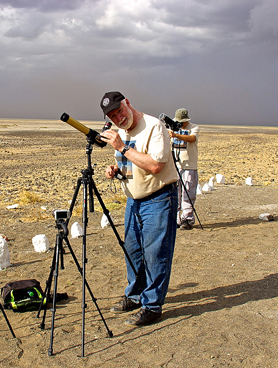
Planet Hunters Talk Moderator Tony Hoffman – The photo is of me in Kenya, about to find out that eclipses and dust storms don’t mix!
When Planet Hunters was launched, I shifted my focus to it, as the search for planets orbiting other stars is one of the great quests of our time. Up until I was in my 30s, there were no known exoplanets. In just the past 2 decades, a profusion of planets and solar systems have been found. The idea that ordinary people such as myself can take part in this endeavor staggers my imagination, and the success of Planet Hunters—in which a group of people “eyeballing” light curves have been able to find planets that eluded the Kepler project’s own search algorithms—has been a wonderful vindication of the idea that the human eye is better at some forms of pattern recognition than machines. It’s been a thrill to play an active role in Planet Hunters, and to have contributed to the discovery of at least one new world. I’m glad that Planet Hunters has been able to play a role in helping to survey what sort of worlds are out there, and how other worlds and solar systems are like or unlike our own.
I live in New York City, and I work as a writer. I’m glad to be able to help chronicle some of this great age of discovery. Being involved as a moderator in Planet Hunters has given me a personal connection to the science of exoplanetology. I’ve encountered some brilliant people whose skill at analyzing transits far exceeds my own. Although only a small fraction of the 200,000 (??) Planet Hunters volunteers may get their name on a paper or receive any formal recognition, everyone who classifies transits has an important role as a node in this vast human “computer” that can take graphs of a star’s brightness and find new worlds within them
Joe Constant (constovich)
Hello Citizen Scientists! I am Joe Constant and I live in South Carolina, USA with my wife and two beautiful daughters. From a young age I daydreamed about far away and fantastical places. Planet Hunters allows me to look skyward and potentially find some. We live in an exciting time, with the potential close at hand to answer one of humanity’s oldest questions – “are we alone?” The only time I would rather live in that now is in our future where our transportation technologies advance to the point to allow us to reach the distant rocks we are only now able to see.

Planet Hunters Talk Moderator Joe Constant
15 percent of 1 million
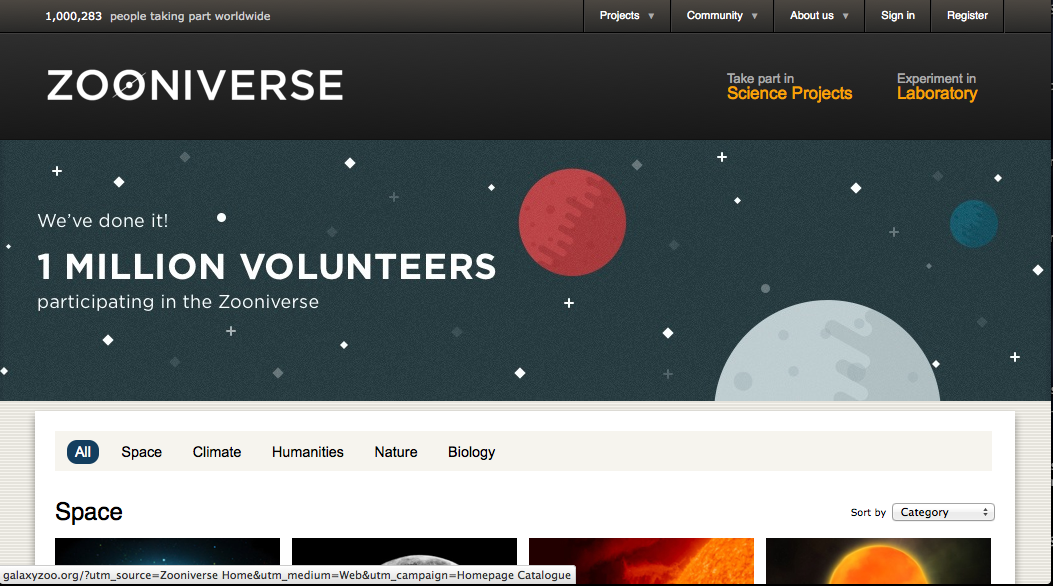
The Zooniverse achieved a major milestone last Friday. The 1 millionth (that’s right 1 with 6 zeros after it!) person registered for a Zooniverse account. While writing this blog, I decided to go and read the very first blog post formally announcing the Zooniverse. It’s amazing to see how far the Zooniverse has come and see the interesting science and exciting discoveries that have been produced as a result: starting with Galaxy Zoo launching in 2007 to Planet Hunters launching in 2010 (where we were the 10th Zooniverse project) to the Zooniverse today now with over 20 projects spanning not just astronomy but biology, ecology, history, and more. Congratulations to all involved!
If you’re interested in seeing how those 1 million volunteers are distributed, Rob Simpson has created a global map of the Zoonvierse community. Also Grant Miller and Rob Simpson have come up with some other cool graphics and interesting statistics about the Zooniverse on the eve of the 1 millionth registered volunteer. Check them out here, here, and here. Also if you’re interested in seeing all the scientific publications from Zooniverse projects (including the 6 published Planet Hunters papers), you can find them all on the Zooniverse publications page.

Image credit: Brooke Simmons
This accomplishment is yours too. Our estimate is over 280,000 people world wide (unregistered and registered volunteers) have participated in Planet Hunters. 150,000 registered Zooniverse volunteers have classified at least one Planet Hunters light curve. Roughly 15% of the 1 million registered Zooniverse volunteers have contributed to Planet Hunters science. That’s a huge representation! Thank you for the time and effort you put into Planet Hunters. We appreciate the time and effort you put in to help make the science happen. Thanks for being part of the Planet Hunters community and the larger Zooniverse community.
So let’s celebrate this milestone in the only way that seems fitting: classify light curves today at http://www.planethunters.org or maybe (just for today 😉 ) even take a look at some of the other Zooniverse projects at http://www.zooniverse.org
May the Zooniverse Live Long and Prosper!
Some More Frequently Asked Questions
It’s been awhile since we’ve had a blog post addressing some of the repeated questions we get from new volunteers that our Talk moderators, the science team, and other members of the Planet Hunters community have answered, so I thought I’d spend this week’s blog on this topic. You can check out our previous FAQ post from a long while ago here.
Q. Why can I only see 30 days of the Kepler data on the Planet Hunters classification interface but after I classify through Talk I can see more data?
A. Partly that is because of how the site was originally designed and how much data we had at the time. We designed the Planet Hunters interface to show data from Quarter 1 which was roughly ~33 days long. When longer quarters of Kepler data were released, we thought that showing the full Q1 data in one go was working well for Planet Hunters, so we decided to cut the longer observations into smaller sections that we would send to different volunteers to classify. Each 30 day light curve segment receives 5-10 independent volunteer assessments. On the Talk page for the light curve you can go to examine star and that will take you to our source pages that show all the light curve sections available for that star in the Planet Hunters database that you can scroll through and zoom-in like in the Planet Hunters interface.
Q. After classifying more stars on Planet Hunters, I think I want to change my answer to a previous classification. Can I change it?
A. No, once you’ve submitted your classification for a given light curve on Planet Hunters there is no way to go back. We want your first opinion without being influenced by others or added information. For example, you might mark more transit boxes on the light cure of a star that you learned from Talk is a Kepler planet candidate than for a light curve of a star that you knew wasn’t a Kepler planet candidate. So we don’t allow you go back to change a classification after it has been submitted or know about the Planet Hunters ID of the star until after you have classified.
Q. When is new data uploaded to the site?
A. Light curves are uploaded once we’ve finished a Kepler Quarter (which is 90 days of observations). There is roughly 160,000 stars that get monitored each quarter (the same ~160,000 stars are watched from quarter to quarter by Kepler during its prime and extended mission), and we chop those light curves into 30 day segments. So that’s what you’re seeing on the site, it’s not the first 30 days, it’s currently one of three sections of Quarter 16 of Kepler observations.
Q. Do you announce discoveries?
A. Yes, we announce the discovery of new planet candidates and science papers on the blog and all of the scientific papers resulting from Planet Hunters classifications and Talk discoveries can be found here.
Q. Are you giving credit to those that find the candidates?
Yes we are absolutely giving credit to people who are identifying planet transits that become discoveries. Each published paper from Planet Hunters has an acknowledgments section where we list the people who contributed to the finds. We also have these acknowledgement sections as websites. If the planet candidate is a significant component of the paper then we may add the discoverers as coauthors to the paper. You can check out the published papers here. We also acknowledge all Planet Hunters volunteers here.
Q. What about this single low points (see example light curves below) ? Should I mark those as transits?
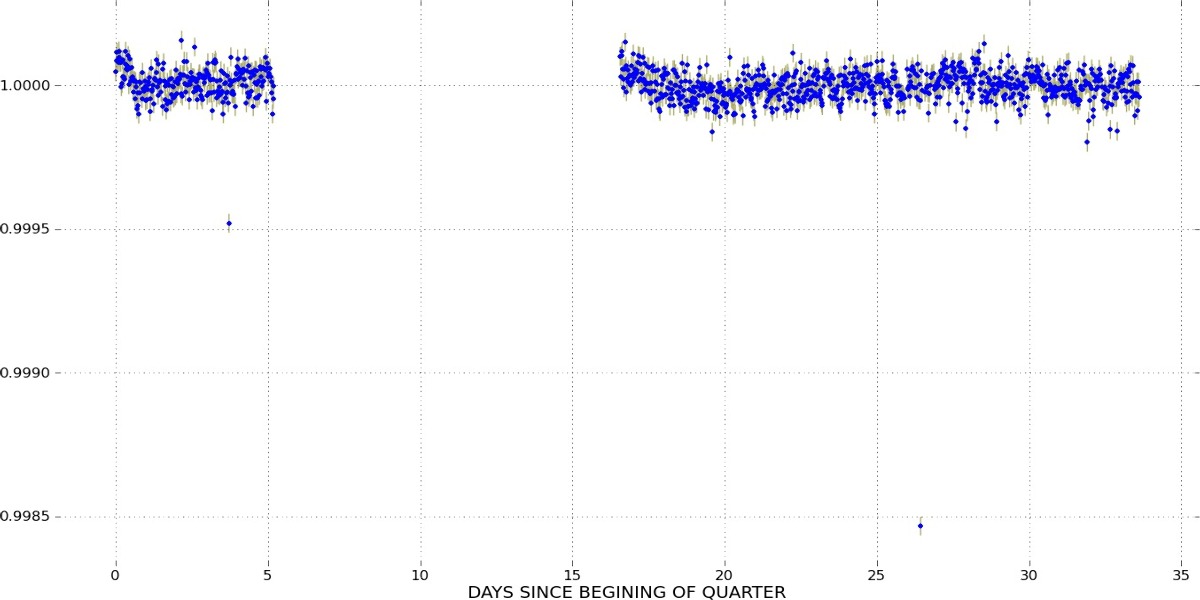

A. No, these single low points you see in the two example light curves above are not transits. They are likely just bad/spurious data points. If you see a single low point don’t mark it as a transit. Transits typically last a few hours to tens of hours, so there should be more than 1 low point if there is a planet transiting the star.
Q. Aren’t there automated ways with computers that you could search for these planet transit signals?
A. Yes, and the Kepler team and many other astronomers are doing just that. There are automated methods that have been developed and are being used to look for transits in the Kepler data. Many groups of astronomers are looking through the Kepler light curves using computer programs that look for repeating signals due to transits. The Planet Hunters team thinks that there may be transits missed by the computer that the human eye may find so that’s why we started the project. We have found planet candidates missed by the automated routines. You can find out more on the results from the project on the blog. If you want to try your own analysis, you could start by using the csv file of the light curve data we provide on the source pages (click on examine star on the Talk page of the light curve), but if you plan on doing a full analysis you’ll want to get the data from the NASA public archive MAST at http://archive.stsci.edu/kepler/
Q. What’s a Kepler Threshold Crossing Event?
A Threshold Crossing Event or TCE is a potential transit event identified by the Kepler team’s automated computer algorithms during a search of Kepler data. The majority are false detections, but a few are real transits due to orbiting exoplanets. A subset of the Kepler team examine the TCE list and whittle it down with other checks and analysis to make the Kepler planet candidate list. We mark the light curves of stars where the Kepler team has detected a TCE on Talk with the label ‘Kepler Threshold Crossing Event Candidate’.
If you have other questions, check out our FAQ site or Site Guide. If you don’t see the answer you’re looking for, do ask your question on our Talk website
 Planet Hunters