
Tales From Waimea Part 4- Sunset approaches
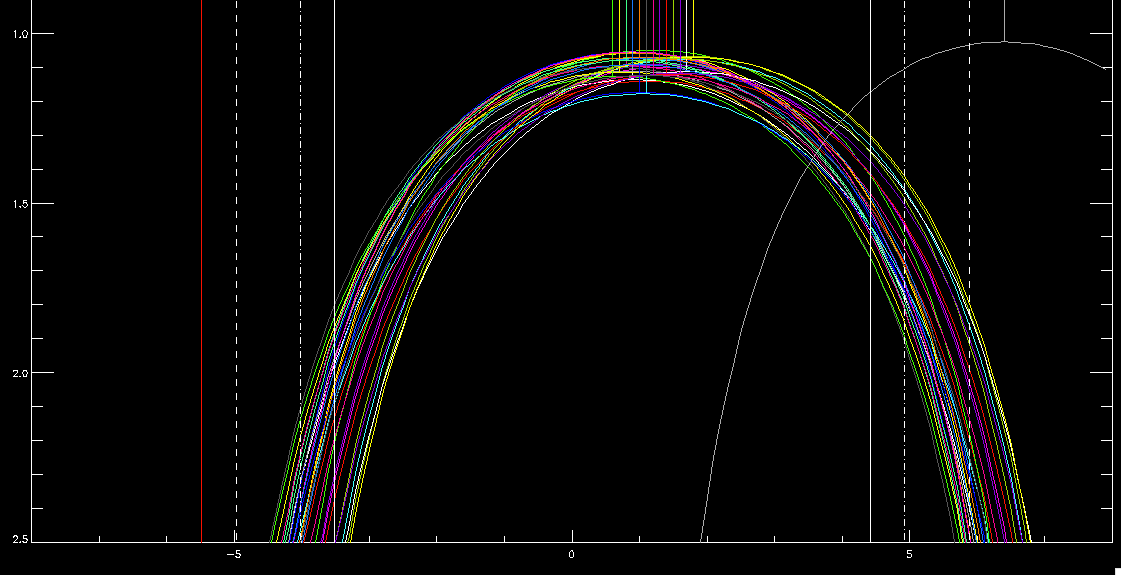
Airmass plot of some of the targets I’m planning on observing tonight
It’s a few minutes before sunset. I’ve gotten the “keys” to Keck 2, and I am currently making the final preparations for the start of the night. It looks like it’s going to be a clear night from the weather report, and the cloud deck has already sunk below the summit. The instrument, NIRC2, has been checked out and initialized. Calibrations including dark images and flat field images have been taken. My starlists are uploaded. I’ve got plots of where the targets are in elevation (or airmass) on the sky. As you can see from the plot above, I’ll be mainly looking at things all in the same place. Not a surprise since I’m going to be looking at the stars in the Kepler field which span ~100 square degree patch of sky. The beginning of the night, the Kepler field isn’t quite up, so I’ll be doing other targets for collaborator, but once the Kepler field is high enough, we’ll slew Keck 2 there and get to work.
Since it’s my first time on the instrument, the support astronomer will stay with me for the first part of the night, and leave once I’m settled in. I won’t control the telescope, the operator on the summit will do that, but I’ll have control of the camera and decide which targets we go to next. You can check out the all-sky-cam for Mauna Kea and see how it looks during the night here.
Tales from Waimea Part 3
This is part 3 of my Keck NIRC2 observing log. (See Part 1 and Part 2).
So I can’t sleep, so I decided to go take some photos of where I’ll be sitting all night. So here’s what it’s like to be in Keck Remote Operations Room 2.

Welcome to Remote Ops 2


Telescope status info on the big screen. Smaller screens below will have all the instrument information and control interfaces. I’ll be sitting here for the night.
- Welcome to the heart of remote ops 2

Polycom that allows me to remotely video conference with the telescope operator on the summit (I’ll at sea level in Waimea not on the summit). You can see a bit of a view into the summit control room.

There is a window, but I don’t think anyone ever opens the blinds especially at night

On the back wall

On the way out. Those windows actually lead to a view of the hallway.
Tales from Waimea Part 2
Greetings from Hawaii. I’m here for observing on the Keck telescopes. It’s 5:45am in Hawaii, and the Sun has just risen. I’m sitting here in my Keck Visiting Scientist Quarters (VSQ) dorm eating a microwaved breakfast burrito and just about to head to bed. My observing night is today or rather tonight on June 28th local time in Hawaii, but I’ve been up all night to try and adjust to being on a night schedule so I’ll feel better tomorrow when I actually need to working . I also go to spend the later part of the night sitting in while last night’s observers were taking data. I’ll get to that in a bit, but I want to talk about earlier in the day first.
Yesterday afternoon and evening, I tasked myself with reading over the instrument manuals and webpages again, taking notes, and typing up a cheat sheet of useful commands, instrument parameters, and things to remember. This included a walk from Keck to a taco joint a short distance down the road where fish tacos were hand and instrument manuals were read.

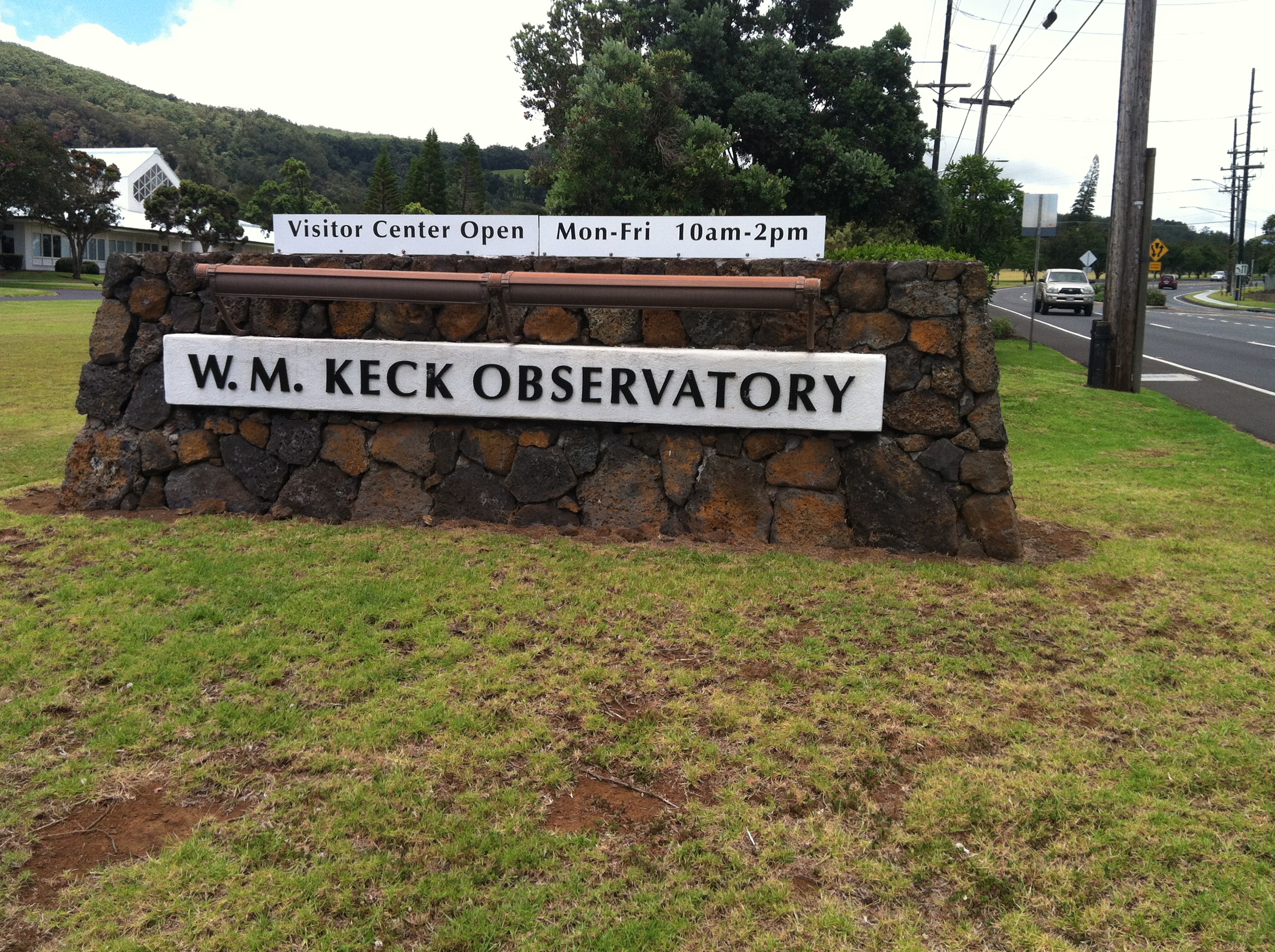
I took some pictures on the walk over on my quest for tacos to show you the main Keck HQ building from the street side. You can see in the image, the glass window has hexagonal panes. That’s a nod to the Keck mirror design which is an assemblage of 36 hexagonal mirrors combined to make the full 10-m collecting area.


The early evening, I slept so I could be up and awake much later in the evening to sit in and eavesdrop on the current night’s observers who had the second half the night. I arrived around 2am, and they graciously let me hang out in the remote room typing up my notes, and asking questions here and there about using NIRC2 and the natural guide star adaptive optics system. I got a chance to quietly watch over their shoulders to get a sense of what the general procedure was for executing an observation from start to finish. I’m now feeling more comfortable with the NIRC2 guis and command interface for tonight’s observing.
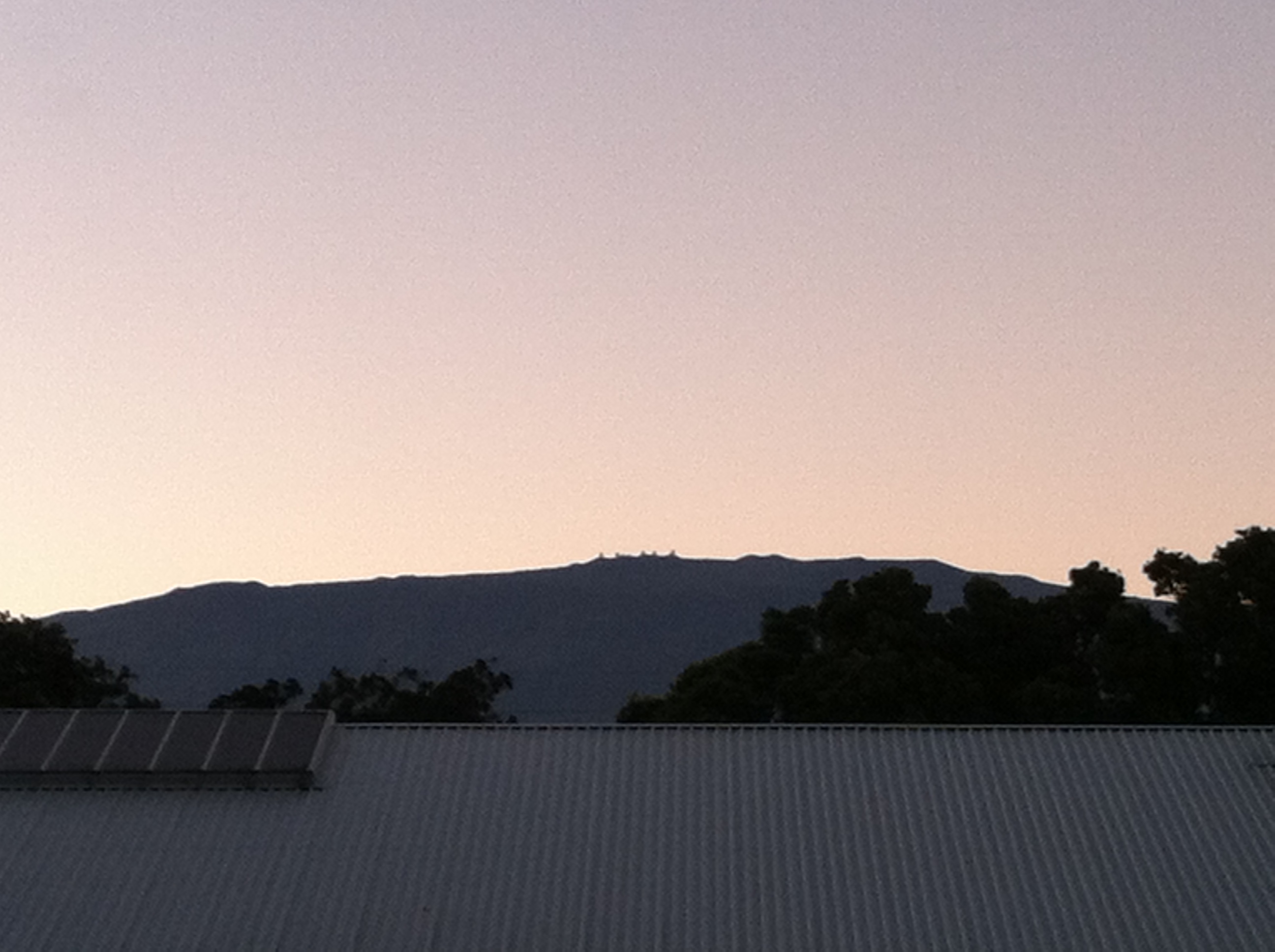
This morning, the skies around Mauna Kea are clear, and you can actually see there’s a mountain in the distance. With my back to the dorms facing the main Keck HQ building, here’s the view of Mauna Kea at early sunrise. If you squint (or zoom in with your camera), you might just make out that there are telescopes on top.

 \
\

And so with that, I have a starlist to make tomorrow afternoon, and I meet with the support astronomer in the mid afternoon to go over setup and get me situated with the calibration images. I’ll take lots of pictures of the remote room tomorrow, but for now it’s time to sleep.
Tales from Waimea Part 1
Greetings from the Big Island of Hawaii. I’m here for my observing night on Keck II, part of the pair of 10-m telescopes on the summit of Mauna Kea. I applied months ago through the Yale Time Allocation (TAC) for a night to use NIRC2 with Natural Guide Star Adaptive Optics to zoom in around potentital Planet Hunters planet candidates and other Kepler planet candidates to see if there are any lurking stars (like in the case of PH1 b) that may be contaminating the Kepler light curve and diluting the transit depth that we measure (and the size of the planet that we measure). These observations can also be used to help rule out potential false positive scenarios for these candidates as well.
So after flying in from NYC late last night, and making the drive from the Kona airport to Waimea, I’m finally at Keck VSQ (Visting Scientist Quarters) on the Big Island of Hawaii. You might ask why I’m not remote observing from Yale as other members of the science team has done on many other ocassions. This is my first time on NIRC2 and Keck II, and since it’s all new, it’s best to come out and sit next to the support scientists and helpful people at Keck HQ to show me the ropes.
Keck Observers don’t go up to the ~14,000 feet summit. We stay at sea level in Waimea and remote observe with the summit operator. My night is on Friday and my first night ever observing with NIRC2 or Keck II, so today is prepping target lists, reading instrument manuals, making my own observing notes, and generally prepping for tomorrow night. Later tonight, I’ll be sitting in the remote room behind tonight’s observers who are doing similar things with NIRC2 and graciously allowing me to hang out and watch. I’ll be looking over their shoulder and try to learn and get familiar with the instrument and control guis. Then tomorrow afternoon, once the instrument is released from the day crew (who prep the instrument and take care of general maitenance on the instrument and the telescope), I’ll meet with the support astronomer who will help me setup the instrument and answer any questions that I have.
I’m soloing, so I’ll be pretty busy during the observing run and the next few days, but I’ll try and blog in between updating you on what’s going on here in Hawaii.
To give you a taste of what it’s like to be here. I’ve taken lots of photos:

Main Keck building. Keck HQ. Located in here are the remote observing rooms for Keck I and II

Dorms for the observers.
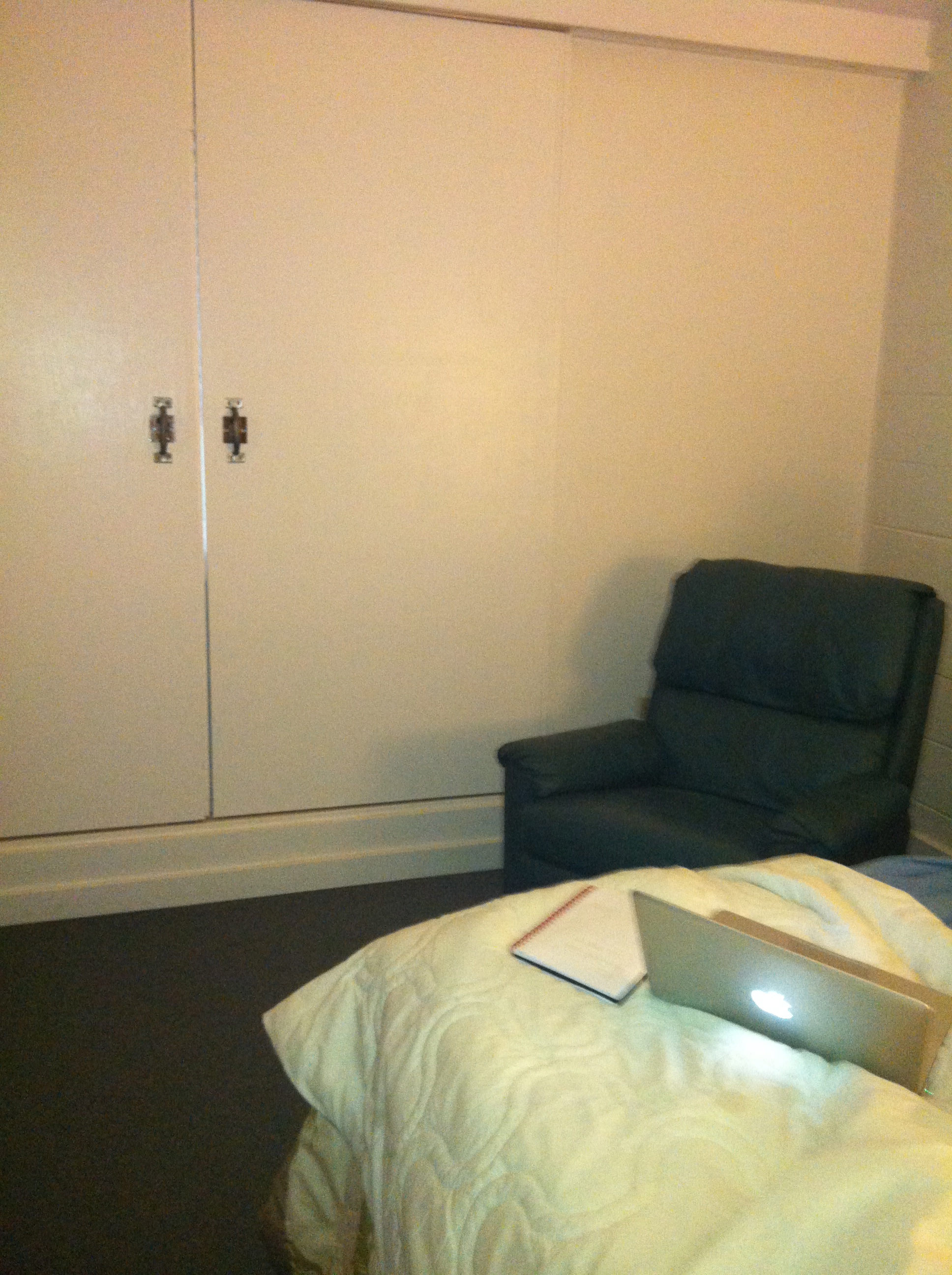
Inside my dorm room. Awesome thing about the Keck observing quarters is the thick wooden panel shutters for the window to block all the light so you can get some sleep post sunrise.

- There’s even a beach towel waiting for you
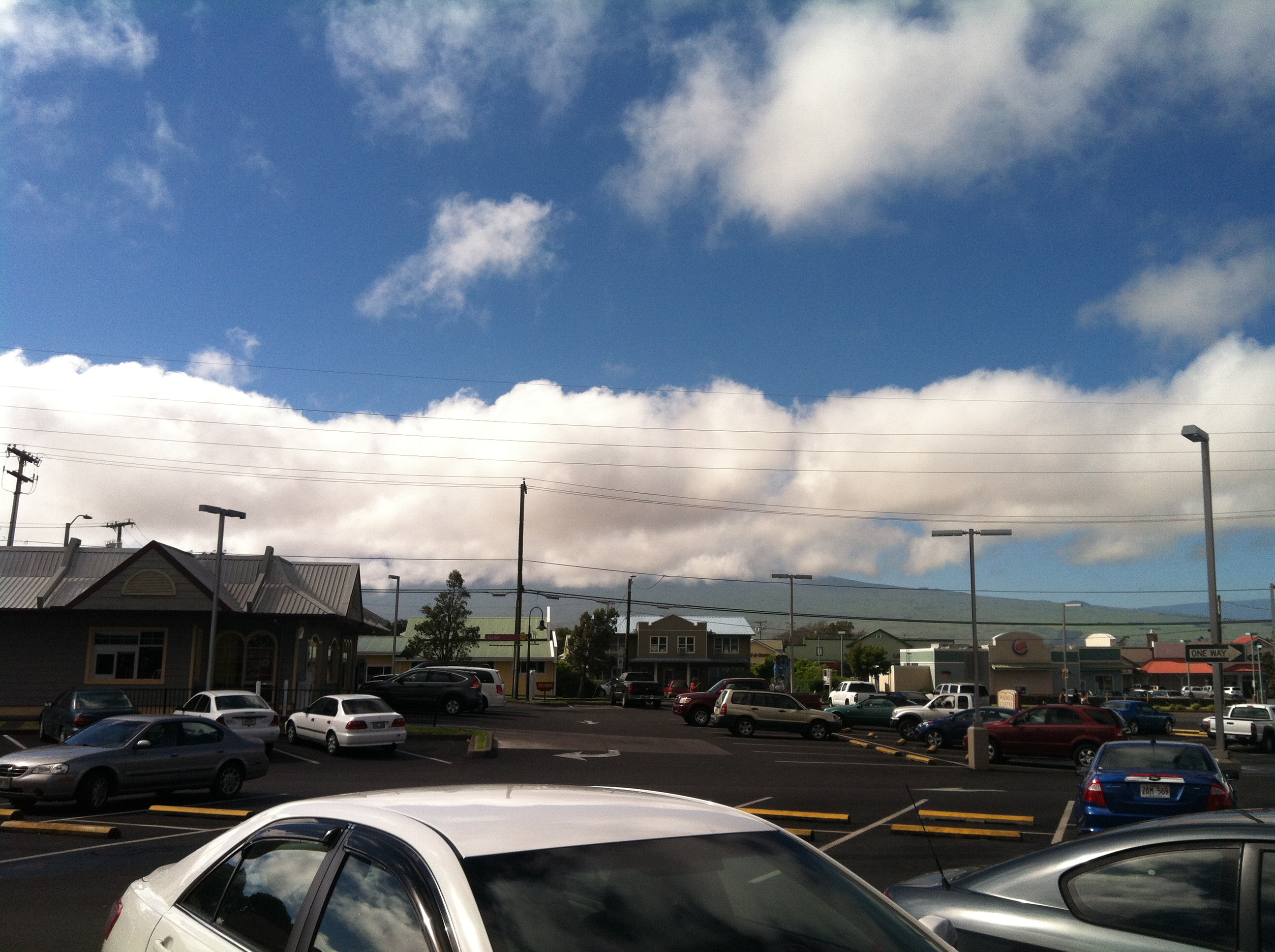
View of a cloudy Mauna Kea

I don’t think I’ve been on an observing run on the Big Island without stopping at the KTA for food and supplies. Made my stop there this morning.
Worlds, not just planets
I’m an astronomer partly because of the power of science fiction to inspire the imagination. While I still read plenty today, there were a few years where I did nothing but devour novel after novel, and series after series. My favorite pieces, then and now, are those which take an unfamiliar situation – an Earth with an extra Moon, a Universe in which pi varies – and follow the logic through remorselessly I was talking at dinner last night about a particularly chilling example, the unforgettable noirish Rogue Moon, but there are uncountable examples.
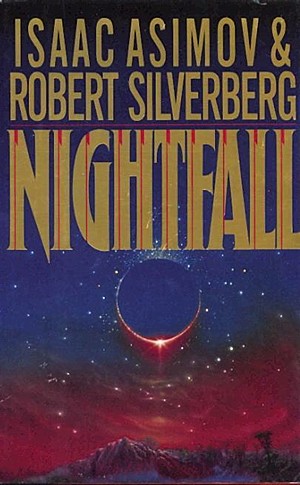
Is there a planet in a 6 star system somewhere that looks just like this?
One perhaps more familiar than most to planet hunters is Asimov’s story Nightfall, a dramatic evocation of what happens on a planet with six suns when night eventually falls, something that happens only once every 2049 years. (I wonder why he chose 2049?). This story inevitably comes up whenever I mention our very our four-star world Planet Hunters 1b, although it would have a more normal setting; two of the stars are distant enough, I reckon, for it to still be ‘night’ when only they are above the horizon and the planet’s circumbinary orbit also would seem more normal. I’m mentioning it now because it’s been slowly dawning on me that, while Planet Hunters 1b is only an approximation to the planet in Nightfall, thanks to the work of planet hunters everywhere science fiction authors now have a wide variety of real worlds to choose from – real planets on which to set their stories.
On the other hand, we seem to get a kick out of discovering worlds we’ve already imagined (many of the press reports for our habitable worlds paper suggested that an Avatar-like moon might exist, for example). This theme is taken up by Oxford’s Ruth Angus in a public talk she gave a few weeks ago – the video’s worth a watch.
Modern Statistical and Computational Methods for Analysis of Kepler Data
Greetings from Research Triangle Park, North Carolina. For the next two weeks, I’ll be hanging out at the Statistical and Applied Mathematical Sciences Institute (SAMSI) for the Modern Statistical and Computational Methods for Analysis of Kepler Data mini-research program.
SAMSI’s goal is “to forge a synthesis of the statistical sciences and the applied mathematical sciences with disciplinary science to confront the very hardest and most important data- and model-driven scientific challenges.” This particular 3 week program (I’m staying two weeks since I have to be in Hawaii for my observing run on June 28th), is to bring together astronomers, statisticians, and computer scientists to come up with new and interesting ways to tackle the questions and current challenges in the field of extrasolar planets with Kepler data.
I’m giving one of the invited talks today presenting on applying a citizen science approach to the Kepler data set highlighting Planet Hunters science. After the two days of talks from invited speakers, on Wednesday we’ll break into mini-research groups. I’ve come with a subset of the Planet Hunters classification database (No usernames or emails are listed. The only identifying information for a volunteer is an identification number to link classifications) to hopefully learn and develop some new methods and algorithms to combine your classifications and better search for planet transits.
An Update on the TCE Review: Nearly Half Way There!
I wanted to update y’all on the status of our TCE review that we launched at the beginning of the month.
This side project is to do our own Planet Hunters review of the ~18,000 potential transit events, dubbed Threshold Crossing Events or TCEs, identified by the Kepler team’s automated computer algorithms during a search of the first ~3 years of Kepler data. The majority are false detections, but a few are real transits due to orbiting exoplanets. A subset of the Kepler team examine the TCE list and whittle it down to make the Kepler planet candidate list. These newly released TCEs have yet to fully searched by the Kepler team, meaning there are likely discoveries waiting to be found. We have launched a Planet Hunters review of the Kepler TCEs to identify new planet candidates. For each TCE, you’ll be presented with a light curve that has been zoomed-in and folded so that the repeat transits all line up on top of each other. With the folded light curves we can see smaller planets, the rocky ones that are so hard for most of us to see in the regular light curves we show on the main Planet Hunters website. We think Planet Hunters has an advantage in the ability to review the entire TCE list (with your help) and identify not just the rocky planet transits but also the Jupiter-sized and in between. You can learn more about the TCE list and the TCE Review by reading the launch blog post.
As of today, we’re now at the nearly half way mark towards the 184,060 classifications needed, with 7,669 of the 18,406 TCEs complete with 10 looks. For those who’ve already contributed to the TCE review, thank you for your hard work. If you’d like to join in the TCE review and help get us to the finish line with 10 classifications for each of the 18,406 TCEs, please visit http://tcereview.planethunters.org
Cheers,
~Meg
Live Chat Today
We’re having a live chat today with science team members Tabetha Boyajian (Yale University), Chris Lintott (University of Oxford/Adler Planetarium), and Meg Schwamb (Yale University). starting at 4pm BST/ 11 am EDT /8 am PDT/3pm GMT.
There’s lots to talk about today including the failure of Kepler’s reaction wheel 4 and updates on Planet Hunters science. Join us here to watch the live video feed. You’ll also be able to find us on the Zooniverse Google+ Page. If you can’t watch live, the video is recorded and will be available to view here later.
If you have questions for the Planet Hunters team you can ask them, either by leaving a comment here on the blog or by tweeting us @planethunters.
Thanks for watching. You can find the TCE review at http://tcereview.planethunters.org/ and as always you can classify light curves at http://www.planethunters.org
Thoughts on the (possible) death of Kepler
Today brought some incredibly sad news to planet hunters everywhere. The Kepler satellite, which has provided all the data which has fed our site since the beginning, has probably reached the end of its useful life, at least as far as hunting for planets goes.

Kepler team members (& friends of Planet Hunters) Jon Jenkins, Natalie Batalha and Bill Borucki look at Kepler data in an artful press shot. They’re just three of the team who have devoted such care to Kepler.
Facts first. As reported elsewhere, Kepler’s fourth reaction wheel seems to have failed. The reaction wheels are what the spacecraft uses to point accurately, and with this failure Kepler’s down to only two, not the three needed to point precisely at its targets. Without three functioning reaction wheels, Kepler won’t be able to hold its gaze on the part of the sky that hold the stars that we’ve all become so familiar with over the last few years. There are still things to be tried – most of them variants on the tried and trusted ‘turn off and turn back on again’ methods – but the participants in today’s press conference didn’t seem very confident. The likely best case scenario involves Kepler being placed into a stable mode while those of us left on Earth spend the next few months contemplating what else it might be used for (budgets notwithstanding).
So where does this leave Planet Hunters? Bill Borucki – Kepler’s indefatigable principal investigator – was at pains during the press conference to stress that there is plenty of science left in the data that the spacecraft has already sent to Earth. He believes (and who are we to doubt) that Kepler already has enough information on hand to satisfy the critical science goal of determining what the odds of an Earth-sized planet are. There is a year or so of data that hasn’t been seriously reviewed by anyone, and much less than half of the data supplied has ever been viewed by Planet Hunters. In the long run, there are other data sets (the European COROT mission might be worth a look) and future missions (NASA’s TESS will follow where Kepler led, but looking for nearby planets).
Those discussions are for the days to come, though. For now, I want to pay tribute to the people behind the spacecraft. There’s a temptation at times like this to anthropomorize, to feel sorry for our plucky little planet hunter way up in space. Yet the truth is a mission like Kepler is what it is because of the blood, sweat and tears of hundreds of people, many of whom have dedicated literally years of their lives. I don’t know Bill Borucki well, but I first met him when I interviewed him for the BBC’s Sky at Night program. What struck me then, apart from his relaxed humility, was the tale he spun of year after year pitching what was to become Kepler only to be told that his ideas were unrealistic. Most people would have given up, but Bill and his team pressed on and as a result of that dedication were in the right place at the right time when the time came for an exoplanet mission to be picked.
The Kepler team are scattered across the US, and indeed across the world this evening. I hope many of them will be raising a glass to (what seems to be) the end of a job well done. Before we join them, the least we can do is go and look at some of their data they collected – after all, we still don’t know what’s lurking in the Kepler data displayed at Planet Hunters.
Chris
Save the Date: The Next Planet Hunters Live Chat
Mark your calendars! We’re planning our next live chat for May 20th, 2013 at 4pm BST/ 11 am EDT /8 am PDT/3pm GMT to talk about Planet Hunters science and news. You can find the video feed here or you’ll also be able to find us on the Zooniverse Google+ Page.
We’ll be talking to Tabetha Boyajian (Yale University), Chris Lintott (University of Oxford/Adler Planetarium), and Meg Schwamb (Yale University).
If you have questions for the Planet Hunters team you can ask them, either by leaving a comment here on the blog or by tweeting us @planethunters.
 Planet Hunters
